

























Lingual Braces vs Clear Aligners: Which Invisible Option Is Right for You?
When it comes to straightening your teeth, many patients today want results without drawing attention to their treatment. The good news is that modern orthodontics offers more discreet options than ever before. Two of the most popular choices are lingual braces and clear aligners.
Both are designed to improve your smile while staying out of sight, but they work in very different ways. If you are trying to decide between them, understanding how each option fits your lifestyle, comfort level, and goals can make all the difference.
What Are Lingual Braces?
Lingual braces are a type of orthodontic treatment that works similarly to traditional braces but with one major difference. Instead of being placed on the front of your teeth, they are attached to the back surface, facing your tongue.
This hidden placement makes them virtually invisible to others, even when you are smiling or speaking.
Like traditional braces, lingual braces use brackets and wires to gradually move your teeth into the correct position. However, they are often custom made for each patient using advanced digital technology to ensure a precise fit and effective results.
What Are Clear Aligners?
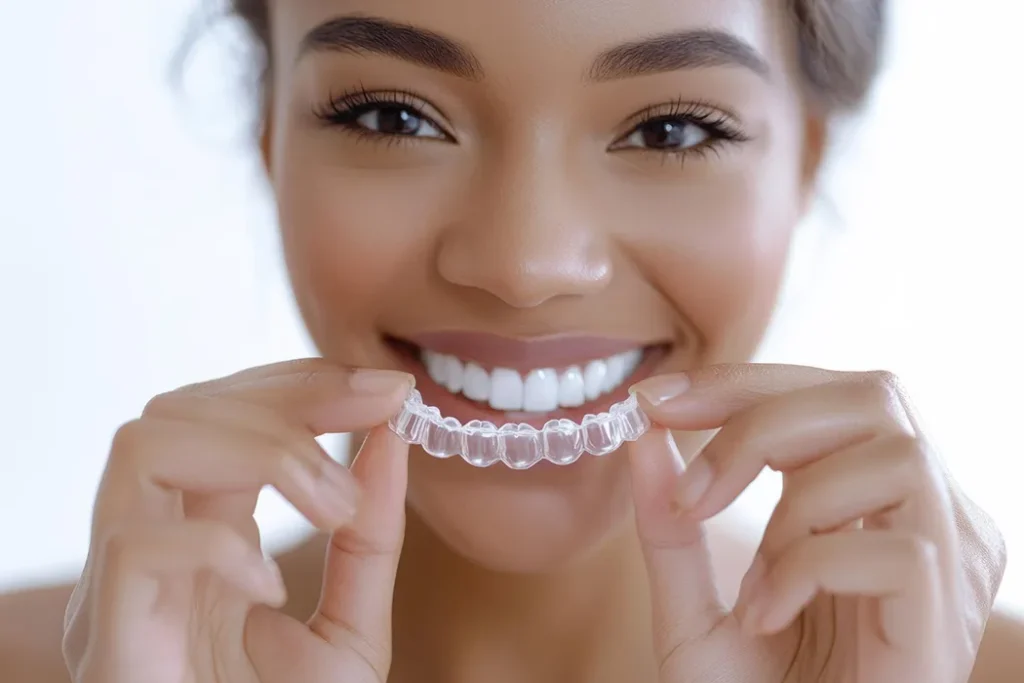
Clear aligners are transparent, removable trays that fit snugly over your teeth. They are designed to shift your teeth gradually over time through a series of custom made aligners.
Unlike braces, clear aligners can be removed when eating, brushing, or flossing. This makes them a popular option for patients who want flexibility in their daily routine.
Because they are nearly invisible, clear aligners are especially appealing to adults and teens who prefer a subtle orthodontic solution.
Key Differences Between Lingual Braces and Clear Aligners
While both options are designed to be discreet, they differ in several important ways.
Placement
Lingual braces are fixed to the back of your teeth, while clear aligners are removable trays that cover your teeth.
Visibility
Lingual braces are completely hidden from view. Clear aligners are very subtle but may still be noticed up close.
Maintenance
Lingual braces require careful cleaning around brackets and wires. Clear aligners need to be removed and cleaned regularly.
Comfort and Adjustment
Lingual braces may take time to get used to because they sit close to the tongue. Clear aligners are generally smoother but require discipline to wear consistently.
Pros and Cons of Lingual Braces
Advantages
Completely invisible
One of the biggest advantages of lingual braces is that they are truly hidden behind your teeth, making them ideal for professionals or anyone concerned about appearance.
Highly effective for complex cases
Lingual braces use the same mechanics as traditional braces, which means they can treat a wide range of orthodontic issues, including crowding, gaps, and bite problems.
Custom fit
Each set of lingual braces is designed specifically for your teeth, which can improve both comfort and precision during treatment.
Disadvantages
Higher cost
Lingual braces tend to be more expensive due to their customization and the expertise required to place them.
Initial discomfort
Because they sit near your tongue, some patients experience irritation or speech changes at the beginning of treatment.
More challenging hygiene
Cleaning around lingual braces can take more time and effort compared to other options.
Pros and Cons of Clear Aligners
Advantages
Removable and convenient
You can take aligners out when eating or brushing, which makes maintaining oral hygiene easier.
Comfortable design
Clear aligners are smooth and less likely to irritate your gums or cheeks compared to brackets and wires.
Fewer dietary restrictions
Since you remove them before meals, you can continue enjoying most of your favorite foods.
Disadvantages
Requires discipline
Aligners must be worn for 20 to 22 hours a day to be effective. Forgetting to wear them can delay your results.
Not ideal for all cases
While aligners are effective for many patients, they may not be the best choice for more complex orthodontic issues.
Can be misplaced
Because they are removable, there is always a risk of losing or damaging them.
Which Option Is Better for Your Lifestyle?
Choosing between lingual braces and clear aligners often comes down to your daily habits and personal preferences.
If you want a completely invisible option and do not mind a fixed appliance, lingual braces may be the better fit. They are especially useful for patients who prefer not to worry about removing or remembering to wear their orthodontic device.
On the other hand, if flexibility is important to you, clear aligners offer more convenience. They allow you to eat freely and maintain your normal oral hygiene routine with minimal disruption.
Lifestyle factors such as work, social interactions, and even hobbies can influence your decision. For example, patients who play wind instruments may find lingual braces more comfortable than traditional braces placed on the front of the teeth.
Cost Considerations
Cost is another important factor when choosing between these two options.
Lingual braces are typically more expensive due to their customization and the advanced technology involved in their design and placement.
Clear aligners can vary in cost depending on the complexity of your treatment and the number of aligners required.
It is always best to consult with your dentist or orthodontist to get an accurate estimate based on your specific needs.
Final Thoughts
Both lingual braces and clear aligners offer effective ways to straighten your teeth while keeping your treatment discreet.
Lingual braces provide complete invisibility and powerful results for complex cases, while clear aligners offer flexibility and comfort for everyday life.
The right choice depends on your goals, lifestyle, and the type of orthodontic correction you need. A professional consultation can help you weigh your options and create a treatment plan that works best for you.
If you are considering orthodontic treatment, exploring these modern options is a great first step toward achieving a healthier, more confident smile.
FAQs
Are lingual braces more effective than clear aligners?
Lingual braces and clear aligners are both effective, but they are suited for different types of cases. Lingual braces work similarly to traditional braces and can handle more complex dental issues. Clear aligners are highly effective for mild to moderate cases, but may not always be the best option for severe misalignment or bite problems.
Do lingual braces affect speech?
Yes, lingual braces can temporarily affect your speech, especially during the first few weeks. Since they are placed behind your teeth near the tongue, some patients notice a slight lisp at the beginning. However, most people adjust quickly as they get used to the braces.
How long do clear aligners need to be worn each day?
Clear aligners should typically be worn for 20 to 22 hours per day for the best results. They should only be removed when eating, drinking anything other than water, and during brushing and flossing. Consistency is key to keeping your treatment on track.
Which option is more comfortable, lingual braces or clear aligners?
Clear aligners are generally considered more comfortable because they are smooth and do not have wires or brackets. Lingual braces may cause some tongue irritation at first, but this usually improves over time as your mouth adjusts.